Marigold & Vow
Home  /  Free guides  /  Multicultural

The five ways multicultural weddings break. And the fix for each.

Real numbers. Real phrases. Real fixes. Twelve traditions with officiant fees. Holy days for 2026 and 2027. The conversation scripts that prevent the fights, and the questions that filter the wrong officiant.

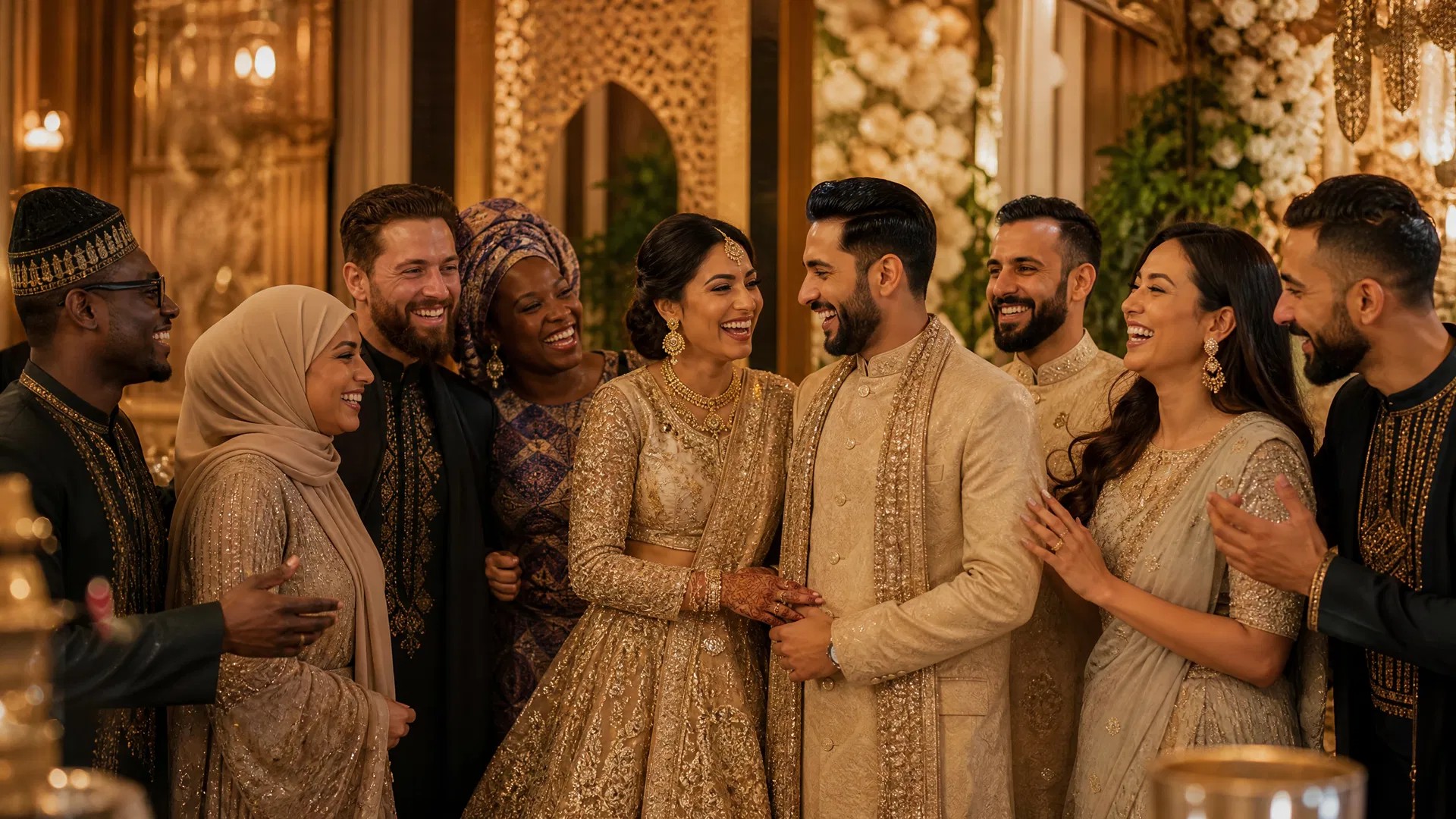
Diverse couples celebrating multicultural weddings across traditions

5 Gaps. Concrete solutions.

Each gap has specific, actionable steps you can take today to plan your multicultural wedding successfully.
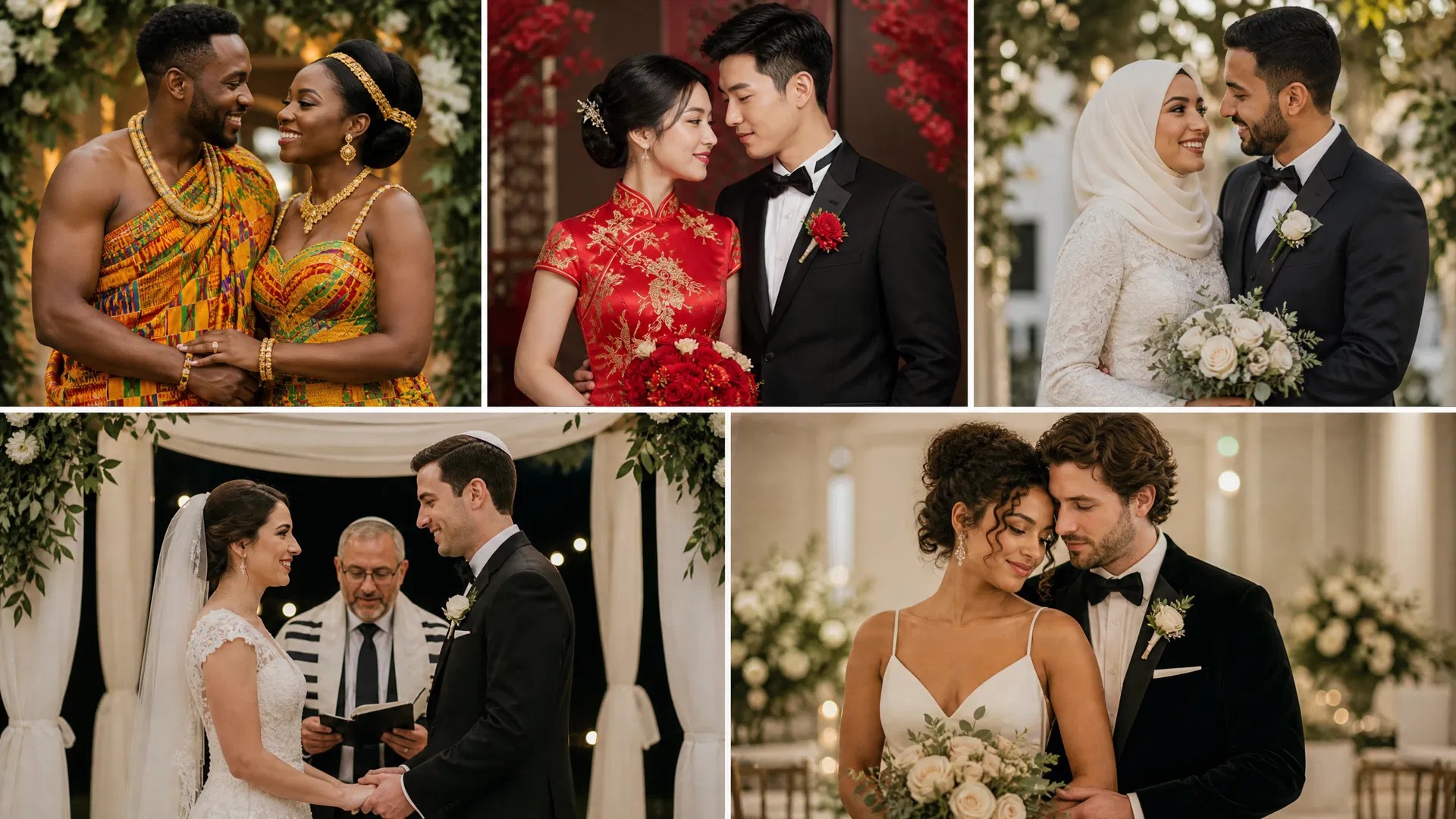
Couples from Indian, Chinese, Persian, Hindu, Jewish, and Western traditions celebrating their weddings
Media Representation Gap
Only 2% of featured weddings on major sites show non-white couples, despite 20% of marriages being interracial.
  • Follow Multicultural Wedding Planning Resources. Seek inspiration from platforms run by and for people of color. Explore diverse wedding blogs and planning services that celebrate fusion celebrations. Action: Visit the Marigold and Vow planner on Etsy for multicultural wedding planning templates.
  • Feature Your Wedding Story. Submit your wedding to diverse platforms. Many actively seek multicultural weddings to improve representation. Action: Document your wedding journey with the tools in the Marigold and Vow planner.
  • Hire Culturally-Aware Vendors. Vendors experienced with multicultural weddings understand your vision and can help showcase your celebration beautifully. Action: Use the vendor checklist in the Marigold and Vow planner.
Digital Tools Gap
Mainstream wedding platforms lack multilingual support and complex, multi-day RSVP capabilities.
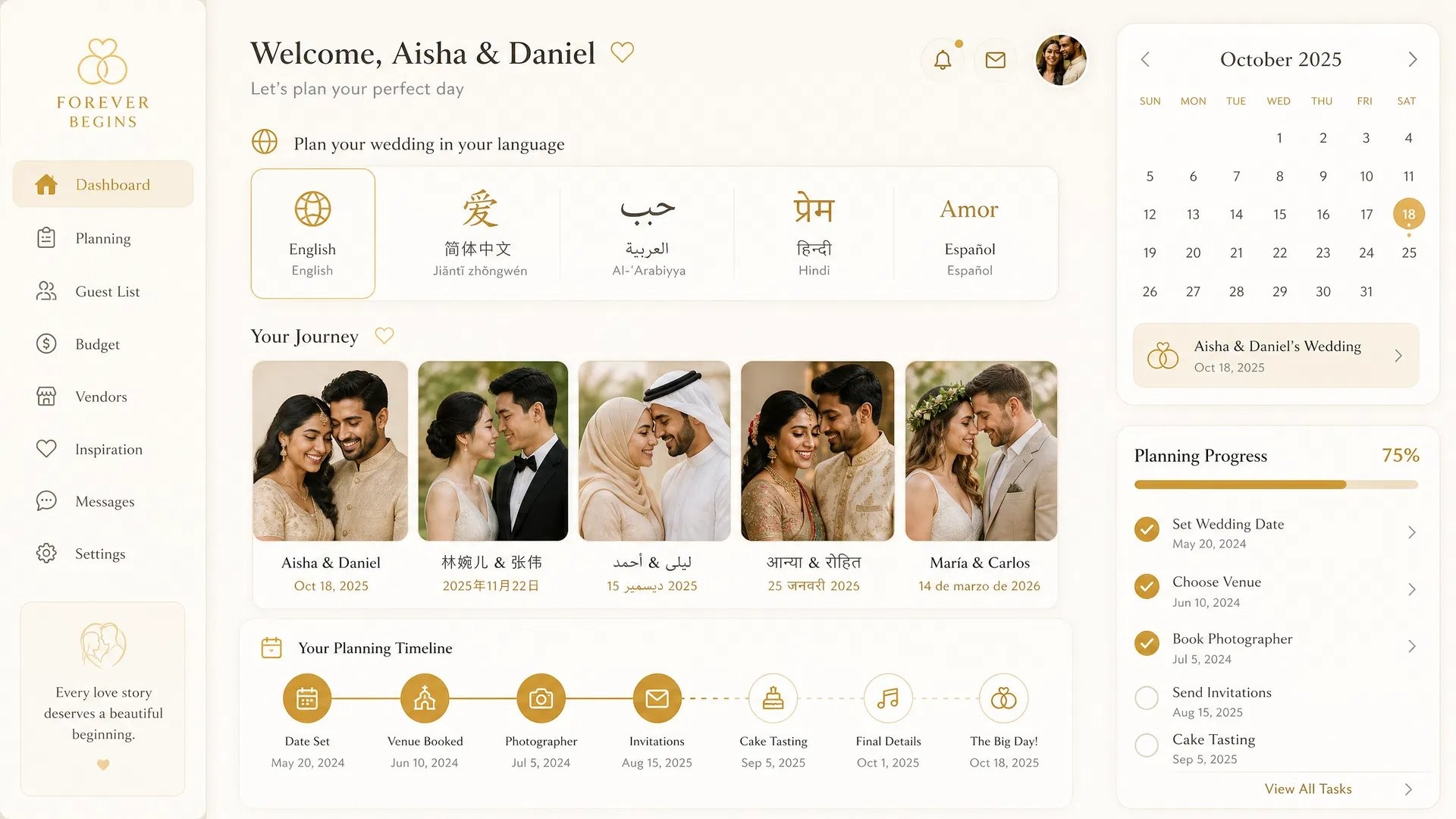
  • Use a planner built for two cultures. Mainstream wedding apps assume one culture, one ceremony, one language. Marigold and Vow handles multilingual coordination, multi-day events, and complex timeline logistics in one file. Action: Visit the Marigold and Vow planner on Etsy. 113 rituals across 29 cultures, 4 interfaith blend templates, connected architecture so one Setup change cascades all 57 tabs.
  • Create a Master Timeline Document. Use Google Sheets or Notion to map all events with times and locations. Action: Use the timeline template in the Marigold and Vow planner.
  • Translate Carefully (Not Google Translate). Hire a native speaker or professional translator for invitations. Google Translate misses cultural nuances. Action: Hire a professional translator for cultural accuracy.
  • Set Up Guest Communication Groups. Create WhatsApp or Telegram groups organized by language. Send updates in each language separately. Action: Create separate communication groups organized by language.
Wedding planning dashboard showing multilingual support in English, Chinese, Arabic, Hindi, and Spanish
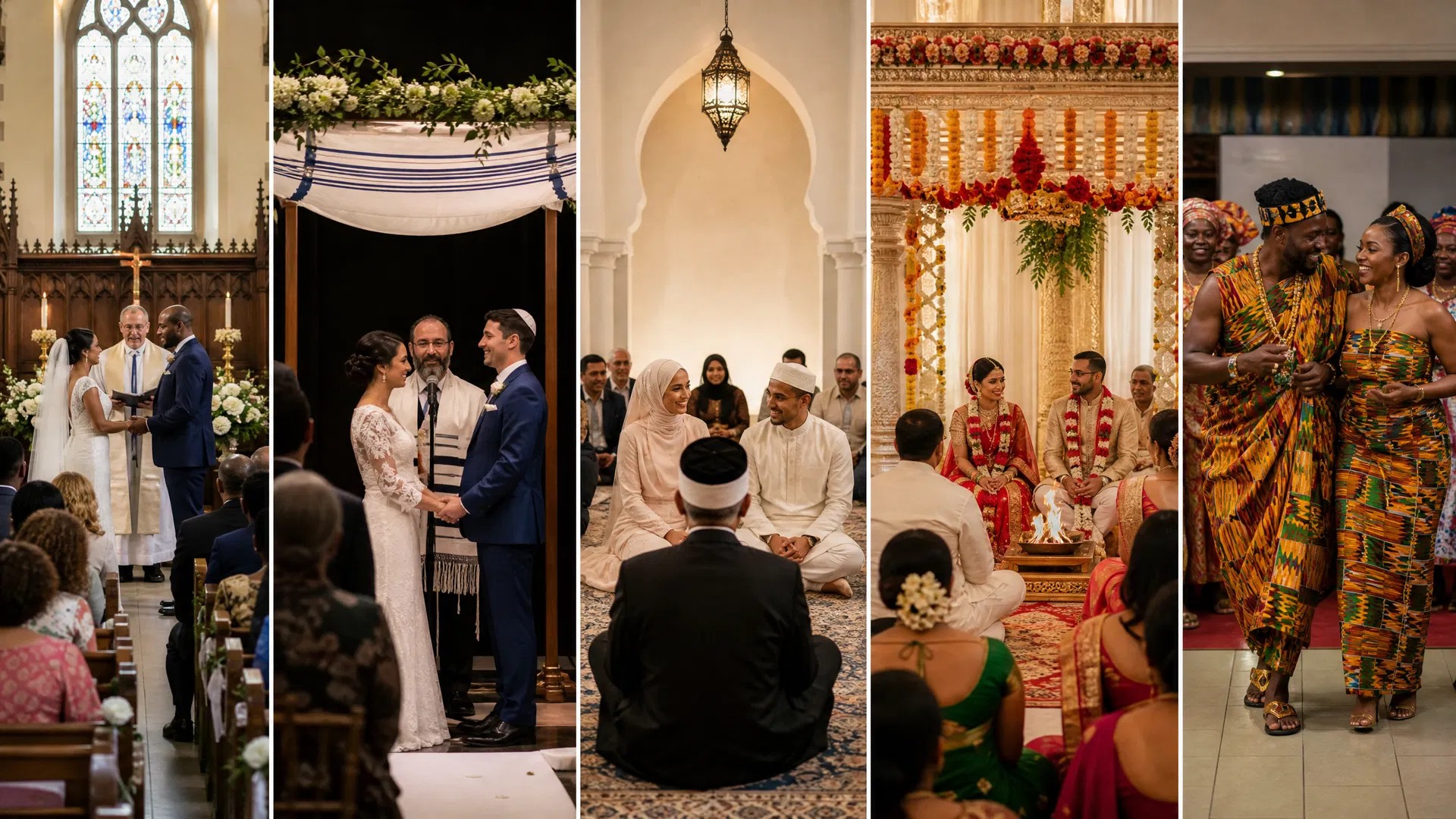
Five wedding ceremonies side by side showing why one-size-fits-all budget tools fail multicultural couples
Financial Equity Gap
Multicultural couples face cultural surcharges for non-Western traditions, music, and specialized catering.
  • Get Pricing in Writing BEFORE Booking. Ask venues: "What is your standard rate for a 3-day event? Are there additional charges for ceremonies or cultural rituals?" Action: Download the vendor pricing checklist in the Marigold and Vow planner.
  • Hire Culturally-Aware Vendors. Vendors experienced with multicultural weddings have transparent pricing and don't charge extra for non-standard requests. Action: Interview multiple vendors with multicultural wedding experience.
  • Negotiate Bundled Rates. Instead of paying per-event, negotiate a flat rate for all days/ceremonies. Action: Negotiate flat rates for multi-day wedding packages.
  • Bring Your Own Vendors. Many venues allow outside caterers, musicians, or decorators. Bringing your own cultural specialist often costs less. Action: Clarify venue policies on outside vendors.
Vendor Expertise Gap
Shortage of vendors with the stamina and cultural fluency for 15-hour, multi-ritual fusion events.
  • Use a planner built for fusion. Generic wedding apps assume one ceremony. Marigold and Vow has 4 interfaith blend templates plus 113 rituals across 29 cultures, vendor brief generators, and a 7-phase day-of grid. Action: The Marigold and Vow planner is built for fusion weddings. Available on Etsy.
  • Create a Detailed Day-of Timeline. Map every ceremony, transition, and meal with exact times. Share with ALL vendors 2 weeks before the wedding. Action: Use the timeline builder in the Marigold and Vow planner.
  • Hire Experienced Multicultural Photographers. Look for photographers who have shot similar weddings. They know which moments matter without being told. Action: Review photographer portfolios for multicultural wedding experience.
  • Assign a Cultural Liaison. Designate a trusted family member or friend to brief vendors on cultural significance of each ceremony. Action: Designate a trusted bilingual or bicultural family member as liaison.
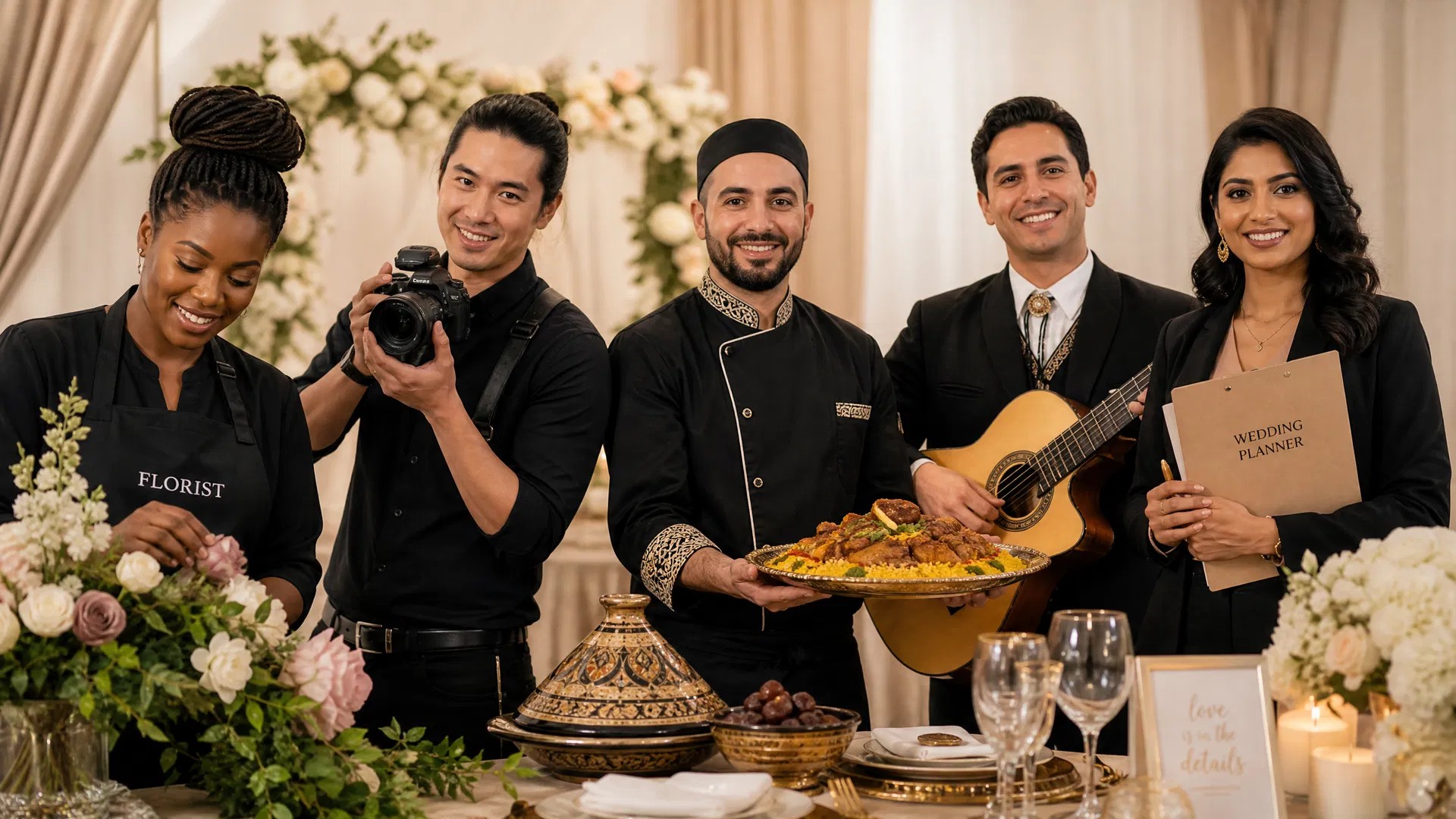
Diverse wedding vendor team: florist, photographer, chef, musician, and wedding planner
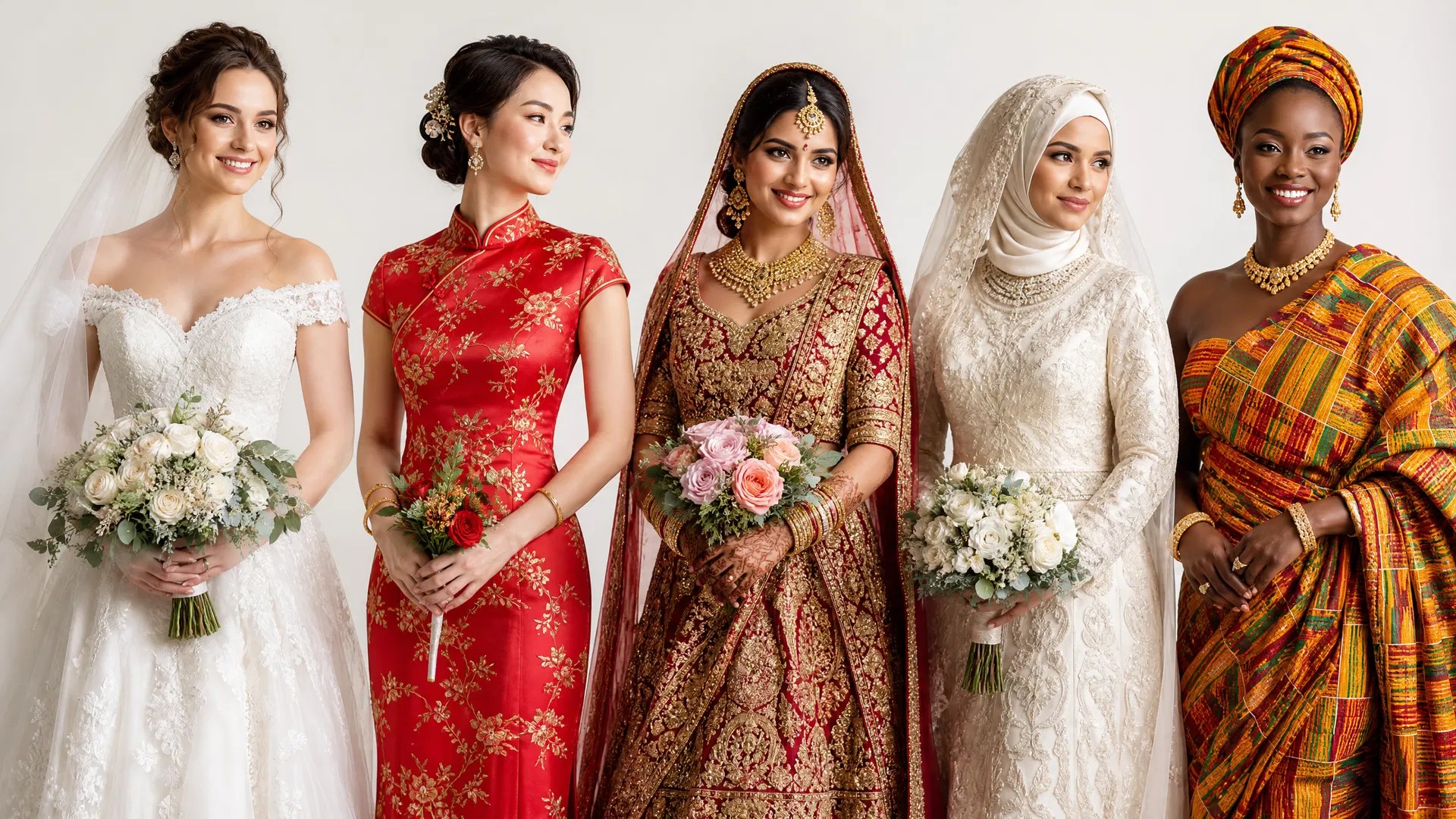
Bridal attire across cultures showing diverse sizing, modest options, and traditional garments
Fashion Accessibility
Wedding fashion is dominated by Western bridal wear. Multicultural bridal options are limited, expensive, and often unavailable in standard sizes.
  • Shop Fusion-Specific Designers. Brands like Anita Dongre, Tadashi Shoji, Elie Saab create pieces blending Western and Eastern aesthetics at mid-range prices. Action: Browse fusion designer collections on Etsy and Instagram.
  • Mix and Match Ready-to-Wear. Buy a Western dress and pair with a cultural top or dupatta. Or wear a lehenga with Western jewelry. Costs 40% less than custom fusion. Action: Mix and match pieces from multiple designers for versatility.
  • Rent Instead of Buy. Rent fusion attire from Rent the Runway or cultural-specific rental services. Cost: $100 to $400 vs $1,000 to $3,000 to buy. Action: Explore rental platforms for affordable fusion attire options.
  • Commission from Emerging Designers. Emerging designers on Fiverr or Etsy offer custom fusion designs at 50% less. Timeline: 8 to 12 weeks. Budget: $600 to $1,200. Action: Commission custom designs from emerging designers.
i.

The five breaks. Each one solvable.

Every multicultural wedding fails for one of these seven reasons. Each break has a specific cost, a specific cause, and a specific fix. None of them require a planner.

1
Family arrives expecting a ritual nobody planned.
Example
Groom's mother flies in expecting a tea ceremony. Bride's aunt expects a Saptapadi. The planner heard neither. The day breaks at 4pm because two people forgot to ask one person each.
If it breaks
$400 to $1,800 for last-minute officiant addition. $200 to $600 for emergency tea ceremony setup (red cloth, low table, jujube tea, eight cups). Plus 90 minutes of guest re-shuffling.
Fix
Eight months out, send both mothers this exact email: "We are designing the ceremony order. Please list every ritual you would expect to see, even small ones. Reply by [date]. We will tell you which we are doing and which we cannot." Send to each separately. Get both lists in writing.
2
Officiant says no to interfaith. Four months in.
Why
Many congregational rabbis will not co-officiate with a priest. Most Catholic parishes require six months of pre-marital counseling. Some pandits will not enter a non-Hindu venue. Couples find out at month four, after the venue deposit is non-refundable.
Real 2026 fees
Interfaith specialist: $700 to $1,500. Independent rabbi (interfaith): $1,000 to $2,500 (NYC and SF $1,500 to $2,500). Congregational rabbi co-officiating: often refused outright. Catholic priest off-parish: requires diocese permission, 3 to 6 months to obtain.
Fix
Search "independent interfaith [tradition] officiant [your city]" before booking the venue. InterfaithFamily and 18Doors maintain rabbi directories. Book the officiant first. The venue second.
3
Wedding date hits a holy day or inauspicious season.
Common traps
August 15 (Catholic Assumption Day, Indian Independence Day, falls inside Shravan when Hindu weddings traditionally pause). Easter Sunday. Yom Kippur week. Ramadan. Chinese Ghost Month (seventh lunar month).
If it breaks
$2,000 to $15,000 venue deposit forfeit if you change date after signing. Plus reprinted invitations $300 to $1,500. Plus deposit losses on vendors who cannot move dates.
Fix
Before any deposit clears, send the date to both elder generations with one question: "Is there any religious or cultural reason to avoid this date on either side?" Their answer in writing. Cross-check against the calendar in section iii.
4
Vendors do not know your traditions.
Most common fails
Caterer: assumes mandap fire is decorative, brings no fire-safe surface. Photographer: books family formals during your tea ceremony. DJ: never heard of a baraat, plays generic Bollywood for grand entrance. Florist: uses lilies (Chinese funeral flower) in a fusion arrangement.
If it breaks
Fire marshal stops ceremony: ceremony cancelled. Photographer missing tea ceremony: $500 to $1,500 reshoot fee, or never captured. Re-do floral 48 hours out: $800 to $3,000.
Fix
Send every vendor a one-paragraph brief at booking, listing the three rituals they need to know about and the timing. Ask: "Have you worked on [Culture A] plus [Culture B] weddings before? What is your approach when you have not?" Vendors who reply with questions are right. Vendors who quote 30 percent more are filtering themselves out.
5
Outfit decisions become a family fight.
Most common
White gown vs red lehenga. Cheongsam vs Western dress. One outfit or two. Whose mother helps the bride dress. Sherwani or tux. The fight is rarely about clothes. It is about which family feels honored.
Real numbers
Two outfits, one day: $1,200 to $4,500 second outfit, $200 to $400 stylist for change, 30 to 45 minute schedule block. Blended outfit: custom embroidery on Western gown $400 to $2,000. Cheongsam plus Western: $300 to $1,200 cheongsam.
Fix
Decide before announcing anything. Tell both mothers the same week, same message: "We are wearing [X] for ceremony and [Y] for reception. We chose because [one specific reason]. We would love your help with [specific small thing only one mother can do]." Give each mother one task. Mothers with tasks do not push back.
6
Ceremony order falls apart minute by minute.
Why
One officiant. Two ceremonies. Three readings. Family processional from one tradition. Recessional from the other. Guests do not know when to stand. The order needs to be designed minute by minute, not improvised in the moment.
If improvised
Ceremony runs 25 to 40 minutes long. Cocktail hour collapses. Photographer loses golden hour. Reception starts 30 to 60 minutes late. Pre-poured bar wasted: $300 to $800. Photographer overtime: $200 to $500 per hour.
Fix
Print the ceremony order with three columns: time, what happens, what guests do (stand, sit, follow couple, photo allowed). Give to officiant, MC, photographer, and the audio tech. Walk the entire ceremony at rehearsal in real time, not summary. Cut readings if total runs over 35 minutes.
7
Both sets of parents meet for the first time at the rehearsal dinner.
Why it breaks
Different languages. Different communication norms. Different expectations about who pays, who toasts, who speaks first. The rehearsal dinner becomes the first family meeting in front of 30 people. Tone is set. Often badly.
If it breaks
Not financial. Lasting. Family tension carries through the wedding day. Photos show it. Guests notice. Two years later, you still remember it.
Fix
Six months before the wedding, host one dinner. Both sets of parents only. Couple hosts. Three topics on a written agenda: 1. The day timeline. 2. The guest list overlap (who knows whom). 3. What each family wants in the ceremony. End on time. Restaurant only. Not anyone's home. The first meeting needs neutral ground.
ii.

The twelve traditions with real officiant fees.

What each tradition expects at the ceremony, plus the 2026 fee range for a qualified officiant in major North American cities. Independent officiants travel. Congregational ones often do not.

Hindu (North)
Pandit $400 to $1,500
Open
Ganesh Puja, 8 to 12 min, family only
Father
Kanyadaan, father gives bride's hand
Vows
Saptapadi, seven steps around fire (40 to 60 min total)
Symbol
Mangalsutra and Sindoor application
Needs
Open flame, mandap setup, Sanskrit speaker
Hindu (South)
Pandit $400 to $1,500
Open
Ganapathi Puja, Kashi Yatra (groom mock pilgrimage)
Vows
Saptapadi around fire, seven steps
Symbol
Thaali (necklace) and Mangalsutra tied
Family
Talambralu, rice tossing on couple
Needs
Open flame, Telugu or Tamil speaker
Sikh (Anand Karaj)
Granthi $300 to $800 (donation)
Setting
Gurdwara preferred, outside requires Akhand Path
Core
Four Lavaan, couple walks around Guru Granth Sahib
Symbol
Palla, cloth joins couple
Close
Ardas, Karah Prashad served to all
Needs
Covered heads, no shoes, vegetarian only
Muslim (Nikah)
Imam $300 to $1,000
Consent
Ijab and Qubool, three times each
Witnesses
Two adult Muslim men, or one man and two women
Symbol
Mahr (gift to bride, gold or cash, agreed in advance)
Document
Nikah Nama, civil-style contract
Needs
Separate seating optional, Arabic speaker, modest dress
Jewish (Ashkenazi)
Rabbi $1,000 to $2,500 (NYC top end)
Open
Bedeken (veiling), Ketubah signing before ceremony
Setting
Chuppah canopy, four poles, flowered top
Core
Seven blessings (Sheva Brachot), ring exchange
Symbol
Breaking the glass at end, single foot
Close
Yichud, 10 to 15 minutes couple alone
Catholic
Priest donation $200 to $800
Open
Procession, Sign of the Cross
Liturgy
Two readings, Gospel, homily (10 min)
Vows
Exchange of consent, ring blessing
Eucharist
Optional nuptial Mass adds 25 min
Needs
Church preferred, parish counseling 6 months
Protestant
Pastor $200 to $700
Open
Welcome, prayer, scripture
Reading
1 Corinthians 13 most common
Vows
Personal or traditional, ring exchange
Symbol
Unity candle, sand, or cord (optional)
Needs
Most flexible on venue, less on text
Chinese (Tea Ceremony)
Family-led, setup $200 to $600
Setting
Family home or hotel suite, separate from Western ceremony
Core
Couple serves tea to elders in seniority order (oldest first)
Symbol
Red envelopes (hong bao) given to couple
Color
Red and gold. No white florals. No lilies.
Photo
Each elder pairing must be captured
Korean (Pyebaek)
Family-led, setup $300 to $800
Setting
Traditional hanbok, low table, often post-reception
Bow
Couple bows to groom's parents (modern: both sides)
Symbol
Chestnuts and dates thrown for fertility
Catch
Couple catches in white cloth
Toast
Jujube tea served
Persian (Sofreh Aghd)
Officiant $500 to $1,200, sofreh setup $800 to $3,000
Setting
Ornate spread on floor, faces east
Items
Mirror, two candles, sugar cones, honey, herbs, flatbread
Sugar
Married women rub sugar cones above couple
Honey
Couple feeds each other honey, three times
Vows
Bride says yes after third asking, not before
Filipino
Priest donation $300 to $800
Setting
Catholic Mass with cultural overlays
Sponsors
Principal sponsors (ninong, ninang), 6 to 12 pairs
Symbol
Veil over couple, cord (yugal), arras (13 coins)
Vows
Catholic vows plus cord and arras blessings
Needs
Catholic counseling 6 months, coin tray
Secular and Humanist
Officiant $500 to $1,200
Open
Welcome by officiant, no religious framing
Reading
Personal essays, poems, or family stories
Vows
Fully written by couple, ring exchange
Symbol
Optional unity ritual (sand, candle, handfasting)
Needs
Most flexible. Best for fusion when neither tradition is dominant.
iii.

Holy day conflict calendar. 2026 and 2027.

Dates and seasons families avoid for weddings. Cross-check yours against both sides before any venue deposit clears.

TraditionAvoid these 2026 and 2027 windowsWhy
HinduShravan: Jul 22 to Aug 19, 2026 / Jul 11 to Aug 8, 2027. Pitru Paksha: Sep 27 to Oct 11, 2026 / Sep 16 to Oct 1, 2027. Kharmas: Dec 15, 2026 to Jan 14, 2027.Inauspicious for marriage. Pandits often refuse.
SikhNo strict bans. Gurpurabs across the year, Gurdwara busy on those days.Anand Karaj welcomed most days. Check Gurdwara availability first.
MuslimRamadan: Feb 18 to Mar 19, 2026 / Feb 8 to Mar 8, 2027. Hajj: Jun 18 to 23, 2026 / Jun 7 to 12, 2027. Muharram first 10 days: Jun 26 to Jul 5, 2026.Fasting, pilgrimage, mourning. Imams decline.
JewishEvery Shabbat (Fri sunset to Sat sunset). Passover: Apr 1 to 9, 2026. Sefirat HaOmer (limited): Apr 9 to May 22, 2026. Three Weeks: Jul 1 to 22, 2026. High Holidays: Sep 11 to 22, 2026.Mourning periods and rest days. Rabbis decline.
CatholicLent: Feb 17 to Apr 4, 2026 / Feb 10 to Mar 27, 2027. Holy Week and Easter Sunday. Advent: Nov 29 to Dec 24, 2026.Penitential seasons. Most priests redirect.
Orthodox ChristianGreat Lent: Feb 23 to Apr 11, 2026. Apostles Fast: Jun 8 to 28, 2026. Dormition Fast: Aug 1 to 14, 2026. Nativity Fast: Nov 15 to Dec 24, 2026.Strict fasting. Priest approval required.
Chinese (lunar)Ghost Month: Aug 13 to Sep 10, 2026 / Aug 2 to 30, 2027. Qingming: Apr 5, 2026. Lunar New Year period: Feb 17 to Mar 2, 2026.Elders consult tongshu almanac for auspicious dates.
KoreanLunar new year: Feb 17, 2026. Chuseok: Sep 24, 2026 / Sep 14, 2027. Family elder checks Saju (four pillars).Auspicious date selection often parental prerogative.
BuddhistVesak: May 21, 2026 / May 10, 2027 (avoided in some traditions).Varies. Family practice differs by school.
Filipino CatholicSame as Catholic. Plus May (Marian month) for some families.Cultural and religious overlap.
Persian / IranianMuharram (Shia): Jun 26 to Jul 5, 2026. Nowruz: Mar 20, 2026 (some families).Religious and cultural mix.
Secular / civic trapsUS Labor Day weekend, July 4 weekend, Memorial Day weekend. Canada Thanksgiving (early Oct).Travel and venue costs spike 30 to 50 percent.
iv.

The six conversations that prevent the fights.

Have them in this order. Before the venue is booked. Each has one exact opening line, what to write down, and what to do with the answer.

Conversation one. With your partner. Alone.
"If we had to pick three rituals from your side and three from mine, and skip everything else, what are your three? What are mine?"
Write down: Six items on one piece of paper. This becomes your floor. Everything else is negotiable.
Do this before any conversation with either family. Without your own list, parents fill the vacuum.
Conversation two. With one set of parents (start with the side that historically defers less).
"We are blending two traditions. We have made a list of what matters most to us. Can you tell us what would make you proud, and what would make you uncomfortable?"
Write down: Two columns. Proud (what they want included). Uncomfortable (what they want excluded). Read it back. Get confirmation by email.
Ask for proud first. Most parents soften when asked for pride before they are asked to compromise.
Conversation three. With the other set of parents.
"Same question. Same order. Plus one extra: what is one thing your community would expect us to do that we should know about?"
Write down: Same two columns plus the extra. The third question catches rituals nobody mentions but everyone notices missing.
Aunties expecting paan. Uncles expecting a specific dance. Grandmothers expecting a head covering. Things no blog mentions but every family knows.
Conversation four. Both sets of parents together. Six months out. Neutral restaurant.
"We have heard from each of you separately. Here is what we have decided. Here is what we kept from each side. Here is one thing we hope you will help us with."
Write down: Three things. The plan. What you kept from each side. One specific task for each parent.
You arrive with decisions, not questions. Mothers who feel useful do not feel rejected. This dinner is not the rehearsal dinner. Hold it six months earlier.
Conversation five. With the officiant. Before booking.
"Will you co-officiate with someone from a different tradition? Will you say words from another faith out loud? What pre-marital requirements do you have? Are you available on our date?"
Write down: Yes or no on each of the four. Plus their fee, their travel rule, and what they will not perform.
Four yes answers required. Anything less, keep looking. Twelve filter questions in section v.
Conversation six. With the venue. Before contract.
"We are having open flame at the ceremony. We are using incense. We are having two officiants speaking sequentially. Can you accommodate all three? Show us in writing."
Write down: Yes or no on each, in the contract. Plus any insurance rider you need, plus any fire marshal restriction, plus any "no candles" clause they would normally enforce.
Mandap fire. Smudging. Incense. Sand ceremonies. Many venues quietly forbid open flame and only mention it after you sign. Get it in writing before deposit clears.
v.

The twelve questions that filter the wrong officiant.

Ask all twelve before you book. What a yes sounds like. What a no sounds like. The wrong officiant means the day breaks at the most sacred moment.

1. "Have you co-officiated with [the specific tradition you need] before? Can we speak to a couple you did that for?"
Sounds like yes"Yes. I co-officiate with [specific name] regularly. I can connect you with a couple who married in March."
Sounds like no"I am open to it." (Vague. They have not done it.)
2. "What is your fee? What is included? What costs extra?"
Sounds like yes"$X flat for ceremony and rehearsal. Premarital counseling adds $Y. Travel beyond 30 miles is $Z."
Sounds like no"It depends." (Run. Vague pricing today, vague performance day of.)
3. "Are you available on our date? Do you have another wedding that day?"
Sounds like yes"Available. No other wedding that day. I arrive 60 minutes before."
Sounds like no"I have one earlier in the day but can make it." (Risk. Late officiants are common.)
4. "Will you read names and words in [partner's language] out loud? Will you rehearse the pronunciations with us?"
Sounds like yes"Send me phonetic spellings two weeks out. We will go through them on a call."
Sounds like no"I will do my best." (Officiant will mispronounce in front of 200 people.)
5. "What religious or cultural elements will you NOT perform? Be specific."
Sounds like yes"I will not say Jesus Christ in the ceremony. I will not bless objects. I can omit the word God if you prefer."
Sounds like no"I am flexible." (Find out month nine they refuse the kiddush.)
6. "Are you legally registered to marry in [your jurisdiction]? Can you show credentials?"
Sounds like yes"Registration number is X. I file your license with [office] within 5 days. Sent to you for review."
Sounds like no"I am ordained online." (Check your state law. Some refuse online-ordained officiants.)
7. "Can we see a sample script? Can we edit it? By when do we return edits?"
Sounds like yes"Sent within 48 hours of booking. You return edits 30 days before the wedding."
Sounds like no"I write each one fresh on the day." (Beautiful in theory. No version to review.)
8. "What happens if you fall ill on the wedding day? Do you have a named backup?"
Sounds like yes"My backup is [name]. They have my script. They know your tradition. You meet them at rehearsal."
Sounds like no"I would find someone." (No backup. Risk you cannot afford.)
9. "Will you attend the rehearsal? Is it billed separately? How long does your rehearsal run?"
Sounds like yes"Rehearsal included. 60 to 90 minutes. I run it, not the venue."
Sounds like no"Rehearsal is extra $300." (Fine if disclosed at booking. Suspicious if hidden until later.)
10. "How long is your ceremony typically? Can you adjust to our timing?"
Sounds like yes"30 minutes default. I can stretch to 50 for a blended ceremony. I cannot go under 25."
Sounds like no"As long as you want." (Vague. Likely runs 50 minutes when you wanted 30.)
11. "What is your cancellation policy? What happens if we postpone?"
Sounds like yes"Deposit non-refundable. Postpone within 12 months credits toward new date. Full refund if I cancel."
Sounds like no"No refunds." (One-line policies hide fights. Ask for written terms.)
12. "What do most couples regret not asking you?"
Sounds like yes"Most couples forget to ask about [specific thing]. Here is what they wish they had known." (Real answer. Real experience.)
Sounds like no"Nothing. I cover everything." (Inexperienced, or arrogant. Either way, no.)

Tools and checklists.

Six working checklists. Tap any card to open. Tick items as you go. Progress saves while the page is open.

The planner has all of this already wired.

113 rituals across 29 cultures, ceremony order builder, vendor brief templates, 21 month cash flow, holy day cross-checker. One Google Sheets file. Instant download.

Get the planner on Etsy More free guides coming soon.